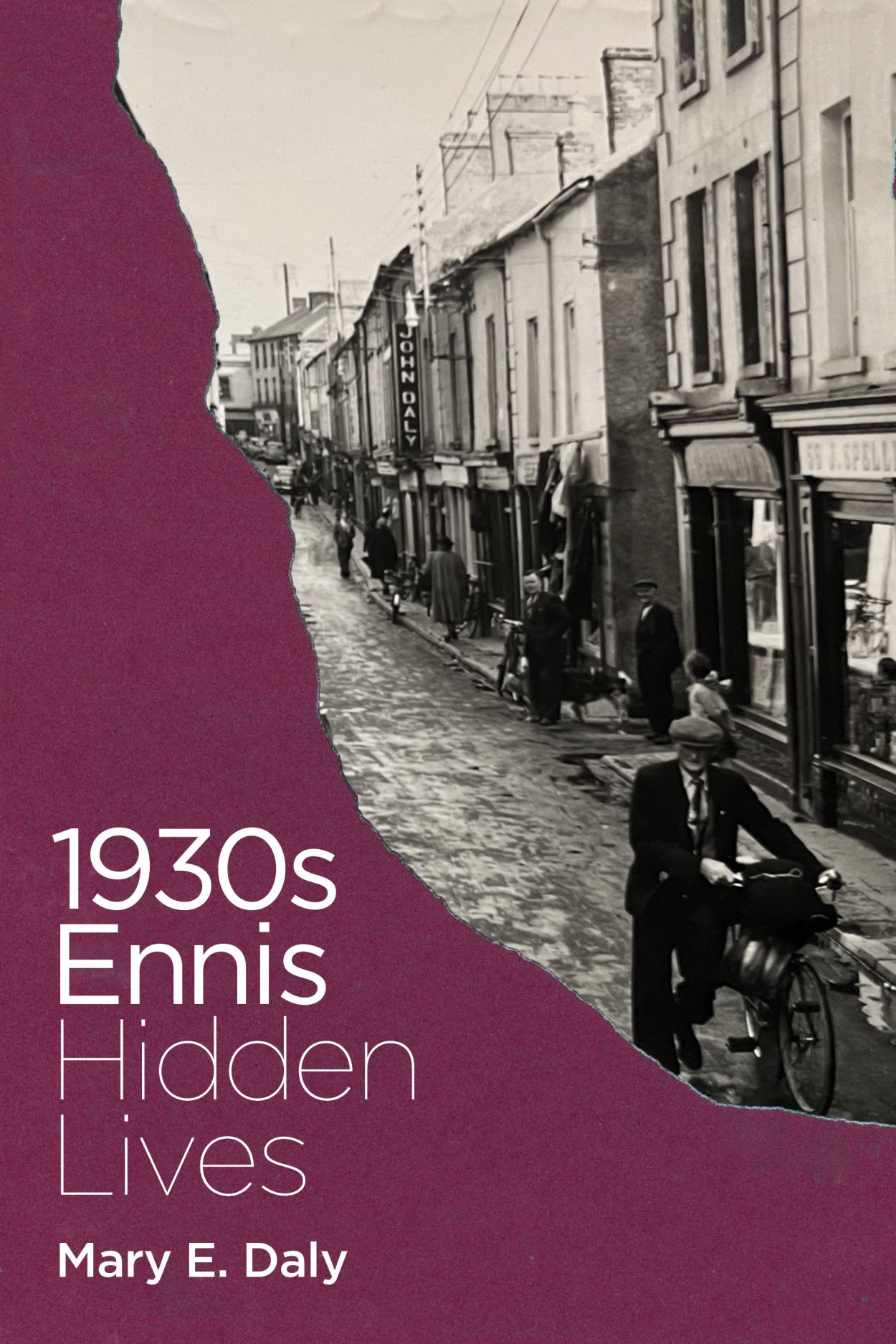
Reveals the extraordinary complexity of a small town in the west of Ireland, drawing on a rich array of sources, including the unpublished diaries and research notes kept by two American graduate students, Conrad Arensberg and Solon Kimball.
The streets of the town were home to those who fought in the War of Independence and took opposing sides in the Irish Civil War. There were also many veterans of World War I living in the town, as well as the membership of a strong labour movement. Poverty, illness, unemployment and appalling housing conditions were common. Jobs were scarce and often bitterly contested, pitting locals against outsiders, married men against single men; different sides in the civil war. Yet these divisions were bridged, in part, by a shared Catholicism, whose ceremonies were a prominent part of life in the town. Although most people were Catholic and native to the area, Ennis was permeated by minute social distinctions, most evident in the social and sporting clubs. Many people combined religious faith with a more critical attitude to clerical teaching.
The cultural politics of compulsory Irish and censorship are evident, but the appalling condition of national schools and lack of opportunities to progress to secondary education were greater challenges. Family, status and respectability were fundamental. Many families helped relatives who were in need to survive, but families often excluded those who threatened its standing in the community: those with mental illness, TB, or women who became pregnant outside of marriage. Yet a lively social scene that included ‘all-night dances’ challenged stereotypes of a joyless society controlled by church and state.
Daly suggests that changes in local government, health and welfare, and economic policy were more important than the Boundary Commission, (1925) or removing the oath of allegiance to the British Monarch (1932). This pioneering book, while focused on Ennis, explores many themes that are relevant to the wider history of a burgeoning independent nation in the 1930s.
320 pages | 9.21 x 6.14 | © 2026
Anthropology: Cultural and Social Anthropology
Religion: Religion and Society
Sociology: Social History


Table of Contents
List of Abbreviations
Introduction
1 Ennis and a Changing Ireland
2 ‘We Will Not Cry Peccavi’: Local Government in Ennis
3 Charity, Health and Welfare
4 Trade and the Local Economy
5 Building a New Ireland: A Cultural Revolution but No Social Revolution
6 Faith and the Ennis Communities
7 Social Life
8 Family, Marriage and Respectability
Conclusion
Bibliography
Index